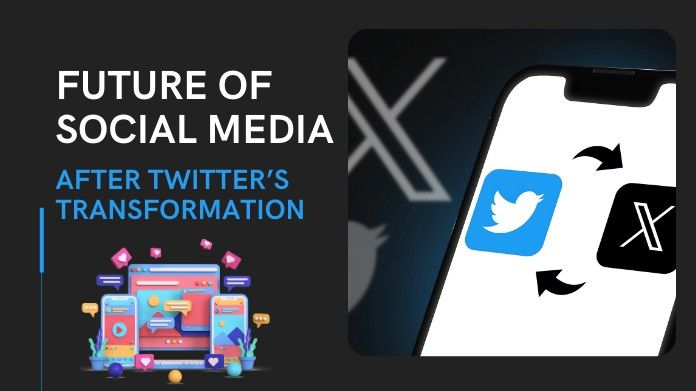
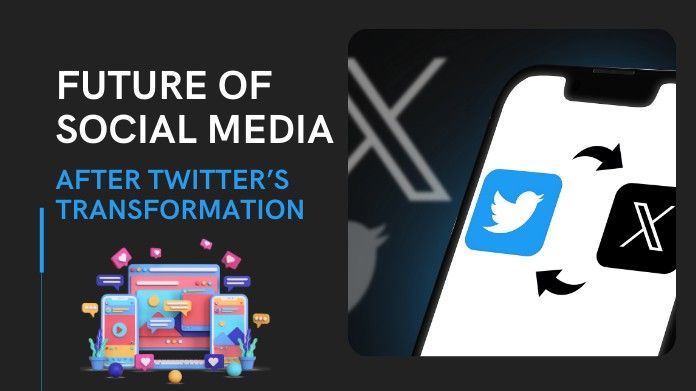
Ever Wondered where is social media headed in the aftermath of Twitter's transformation? If you're wondering what the future holds for Twitter following its recent change, you've come to the perfect spot.
The digital landscape is changing, and consumers and businesses are adjusting to a new reality as Twitter (now X) introduces significant changes such as rebranding, subscription-based capabilities, and problems such as "Twitter Rate Limit Exceeded".
As the industry advances, we investigate how these changes are affecting how we connect, communicate, and interact online.
Twitter's Evolution: A Changing Landscape
Elon Musk's takeover of Twitter has resulted in major changes, including rebranding the site as "X" and changing its verification procedure and content moderation policies.
The introduction of a premium membership model, new revenue potential for producers, and long-form content features have changed the way users interact on the platform.
While some view these improvements as a step toward a more sustainable and creator-friendly paradigm, others express concern about misinformation, user accessibility, & engagement.
As a result, many people are looking at alternative platforms that better fit their demands.
The Rise of Decentralized Social Platforms
In response to worries about data privacy and platform control, decentralized networks such as Mastodon and Bluesky are gaining popularity.
Unlike traditional social media, these networks run on separate servers, providing users greater control over their data and interactions.
Decentralized platforms, which prioritize openness and community-driven governance, offer an alternative to centralized big-tech platforms, giving individuals more control over their online presence.
AI-Powered Social Media: A Game Changer
People's experiences on social media are being quickly shaped by artificial intelligence. Personalized content recommendations and chatbots driven by AI are just two examples of how automation improves user contact and expedites engagement.
By more precisely identifying false or damaging content, AI enhances content filtering. However, as AI spurs social media innovation, it also brings up moral questions about deception, data security, and discrimination, which platforms need to address.
The Shift Toward Visual and Immersive Content
The success of TikTok, Instagram Reels, and YouTube Shorts highlights a shift toward visually immersive and interactive content.
Short-form videos, augmented reality (AR) filters, and live streaming are becoming the new norm, driving platforms to adapt and prioritize these experiences.
As audiences increasingly prefer visual content over traditional text-based interactions, businesses and content creators must evolve their strategies to stay relevant.
What's Next for Social Media?
- Increased AI Integration – AI will continue to enhance user experience through smarter content curation, automated moderation, and real-time engagement.
- Expansion of Decentralized Platforms – More users will migrate to decentralized networks that offer privacy, transparency, and control over their data.
- Growth of Augmented & Virtual Reality – The rise of the metaverse will lead to more immersive social experiences, from virtual events to 3D interactive spaces.
- New Monetization Strategies – Platforms will introduce blockchain-based tipping, premium content subscriptions, and other innovative ways for creators to earn revenue.
- Stronger Regulations & Ethical Considerations – Governments will impose stricter guidelines on misinformation, AI ethics, and online user safety.
Frequently Asked Question
Q. What Major Changes Has Twitter Undergone?
Ans: Under Elon Musk's direction, Twitter modified its content filtering and verification procedures, rebranded as "X," and implemented a subscription-based business model.
Q. What Does 'Twitter Rate Limit Exceeded' Mean?
Ans: This message appears when users surpass the platform's engagement limits, such as the number of tweets, follows, or interactions allowed within a specific timeframe.
Q. What Are Some Alternatives to Twitter?
Ans: Decentralized platforms like Mastodon and Bluesky, as well as emerging niche communities, are gaining popularity as alternatives.
Q. How is AI Shaping Social Media?
Ans: AI is being used for personalized content recommendations, automated moderation, and chatbot-driven interactions, but it also raises concerns about bias and data privacy.
Q. What Trends Will Define the Future of Social Media?
Ans: Social media will continue evolving with increased AI usage, decentralized networks, immersive AR/VR experiences, new monetization models, and stricter regulations.
Conclusion
Twitter's transformation is a reflection of broader industry trends shaping the future of social media. Whether through AI-driven content, decentralized networks, or immersive experiences, the digital landscape is evolving at a rapid pace.
As these changes unfold, staying informed and adaptable will be key to navigating the future of online communication.
For users, businesses, and creators alike, the next phase of social media will be defined by innovation, community-driven engagement, and technological advancements.
About the Author
Hi, I'm Caden Rodriguez, a software engineer and tech enthusiast passionate about exploring the latest advancements in technology. From AI-powered innovations to social media trends, I love analyzing emerging digital landscapes and sharing insights with the tech community.
In this article, I explored Twitter's transformation and the evolving future of social media. With AI, decentralization, and immersive experiences at the forefront, digital communication is entering a new era.
I hope you found this piece valuable—let's continue the conversation!
Ref:
Parker, J. (2023, December 21). The Evolution of Twitter and the Future of Social Media. Linkedin. https://www.linkedin.com/pulse/x-evolution-twitter-future-social-media-joshua-parker-mba-kiu7e/